


By Simon Crawford Welch, PhD
Few concepts in modern leadership have gained as much traction as psychological safety. The phrase appears everywhere – leadership conferences, HR playbooks, corporate values statements, and executive coaching frameworks. It is presented as a foundational ingredient of high-performing teams. When people feel safe to speak openly, admit mistakes, and challenge ideas without fear of punishment, organizations supposedly unlock creativity, innovation, and trust.
The original idea behind psychological safety was both powerful and necessary. In many organizations, employees remained silent about problems because speaking up carried real risk. Questioning authority could damage careers. Admitting mistakes could trigger blame or punishment. In those environments, silence often replaced honest dialogue, and critical information never reached decision-makers.
Psychological safety emerged as a corrective to this dynamic. It created space for people to surface concerns, challenge assumptions, and share incomplete ideas without fear of humiliation or retaliation. When used properly, it can dramatically improve decision-making and learning inside teams.
But somewhere along the way, something subtle happened. A concept designed to encourage open dialogue began slowly transforming into something very different. In many organizations today, psychological safety has quietly evolved from a tool for honest conversation into a shield against discomfort, accountability, and intellectual challenge.
When that shift occurs, psychological safety stops strengthening performance and starts undermining it.
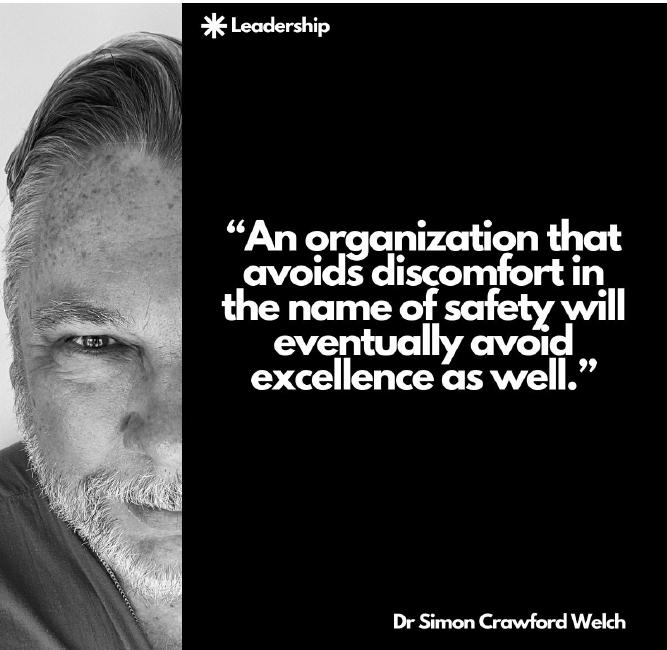
The Discomfort That Growth Requires
Real growth almost always involves friction. New ideas challenge old assumptions. High standards expose performance gaps. Honest feedback reveals uncomfortable truths about how individuals and teams operate. None of these experiences feel particularly safe in the emotional sense of the word.
Yet they are often exactly what progress requires.
The danger arises when psychological safety is interpreted as the elimination of discomfort rather than the permission to engage with it. In some organizations, leaders have become so concerned about protecting feelings that they hesitate to deliver direct feedback. Difficult conversations get softened or postponed. Critical debates are avoided in the name of maintaining harmony.
At first glance, this environment appears positive. Meetings feel polite. Conflict is minimal. Team members seem supportive of one another.
But beneath the surface, performance quietly stagnates.
Without intellectual tension, ideas are rarely challenged. Without clear feedback, people cannot see where they need to improve. Without accountability, standards gradually drift downward. The organization becomes emotionally comfortable but strategically fragile.
When Psychological Safety Becomes Emotional Protection
One of the most misunderstood aspects of psychological safety is the difference between emotional protection and intellectual openness.
The original concept was designed to encourage intellectual openness. Team members should feel safe to propose ideas, question assumptions, and acknowledge mistakes without fear of humiliation. These behaviors strengthen teams because they surface information that would otherwise remain hidden.
However, many organizations have unconsciously redefined psychological safety as emotional protection. Instead of protecting people’s ability to contribute ideas, they attempt to protect people from feeling uncomfortable altogether.
The difference is profound.
Intellectual openness invites debate. Emotional protection discourages it. Intellectual openness encourages people to challenge ideas. Emotional protection subtly signals that challenging ideas might hurt someone’s feelings.
Over time, this distinction changes the culture of the organization. Conversations become less rigorous. Disagreements are softened or avoided. Meetings begin to prioritize emotional harmony over intellectual clarity.
The result is not a psychologically safe environment. It is an intellectually fragile one.
The Rise of the Performance Comfort Zone
When psychological safety becomes overextended, teams can drift into what might be called a performance comfort zone. In this environment, people feel secure not because they are encouraged to speak honestly, but because they are rarely pushed beyond their current capabilities.
Feedback becomes vague and overly diplomatic. High performers quietly notice that underperformance carries few real consequences. Leaders hesitate to raise expectations because doing so might create stress or discomfort.
Ironically, this dynamic often harms the very people psychological safety was intended to protect. Most individuals want to grow. They want to improve their skills, contribute meaningfully, and feel a sense of progress in their work. When expectations are unclear or standards remain low, that sense of growth disappears.
Instead of feeling supported, high performers begin to feel constrained.
Teams need psychological safety to speak up, but they also need something equally important: psychological pressure to improve.
Why Great Teams Combine Safety and Pressure
High-performing teams operate within a balance that is often overlooked in leadership conversations. They combine psychological safety with psychological pressure.
Psychological safety allows people to express ideas, challenge assumptions, and admit mistakes without fear of humiliation. Psychological pressure creates the expectation that those ideas must withstand scrutiny and that performance standards will remain high.
These two forces work together.
Safety without pressure leads to comfort. Pressure without safety leads to fear. Neither environment produces sustainable excellence.
But when both exist simultaneously, teams become remarkably resilient. People feel secure enough to speak openly, yet they understand that ideas will be tested rigorously. Feedback may be direct, but it is delivered within a context of mutual respect and shared commitment to improvement.
This combination creates the conditions for real progress. Debate becomes productive rather than personal. Mistakes become learning opportunities rather than sources of blame. Performance expectations remain clear and consistent.
In this environment, people do not confuse kindness with lowered standards.
The Courage to Reintroduce Challenge
For leaders, restoring this balance requires courage. It means acknowledging that discomfort is not always a sign of dysfunction. In many cases, it is a signal that meaningful work is taking place.
Healthy teams debate vigorously. They challenge assumptions. They examine evidence and question conclusions. These conversations can feel tense at times, but they are often the source of the most important breakthroughs.
Leaders who overcorrect in the name of psychological safety risk removing the very friction that drives improvement. When disagreement disappears from a team’s conversations, it is rarely because everyone suddenly agrees. More often, it is because people have decided that challenging ideas is no longer worth the emotional risk.
That silence is far more dangerous than disagreement.
Redefining Psychological Safety
Psychological safety was never meant to eliminate pressure or difficulty. Its purpose was to create an environment where people could confront challenges honestly rather than hide from them.
When understood properly, psychological safety does not guarantee comfort. It guarantees that people can engage in difficult conversations without fear of humiliation or retaliation.
In other words, psychological safety should protect the process of honest dialogue, not the feelings that arise from it.
Great teams understand this distinction. They recognize that progress requires both support and challenge, empathy and accountability, openness and rigor.
Safety Is Not the Goal – Growth Is
Ultimately, the purpose of leadership is not to create environments that feel perpetually comfortable. The purpose of leadership is to help individuals and organizations grow.
Growth requires honesty. It requires feedback. It requires confronting reality even when that reality is uncomfortable.
Psychological safety remains a valuable concept, but only when it is paired with the expectation of continuous improvement. Without that counterbalance, safety can quietly drift into complacency.
The strongest teams do not avoid pressure. They harness it.
They create environments where people feel safe enough to speak the truth and challenged enough to rise to it.
And in that balance…. between safety and pressure…. real performance begins to emerge.
Simon Crawford-Welch, PhD, is the Founder, The Critical Thought Lab. His latest book, “Artificial Authority: When Leadership is Performed Instead of Carried” was released in March 2026. He is also the author of “American Chasms: Essays on the Divided States of America” & “The Wisdom of Pooh: Timeless Insights for Success & Happiness” (Available on Amazon) www.linkedin.com/in/simoncrawfordwelch